

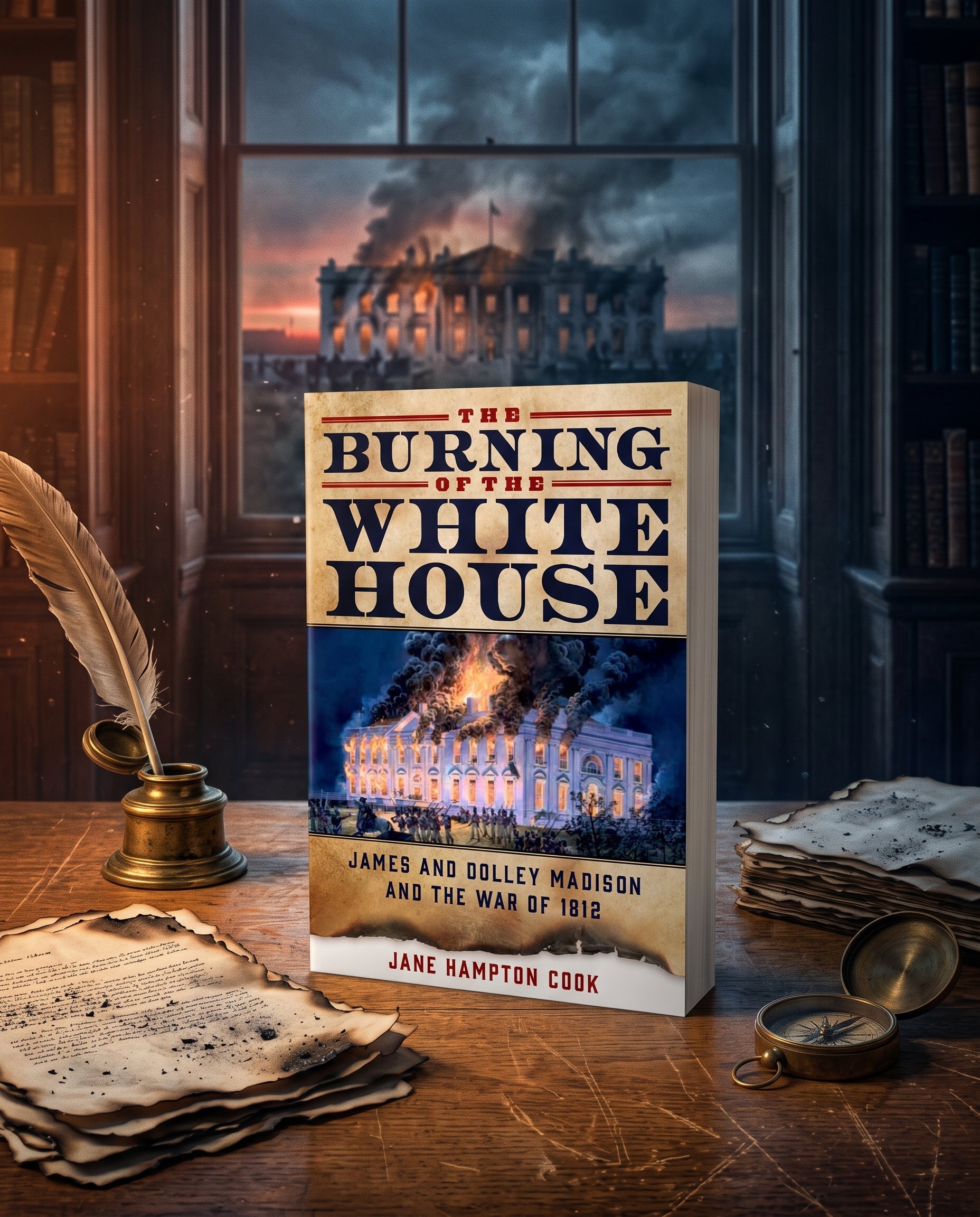

The Burning of the White House
Articles related to the Burning of the White House:
Soft Diplomacy Leadership: How Dolley Madison Bridged the Political Divide
A Philadelphia newspaper offered $1,000 for the head of British Rear Admiral George Cockburn and $500 for each ear.
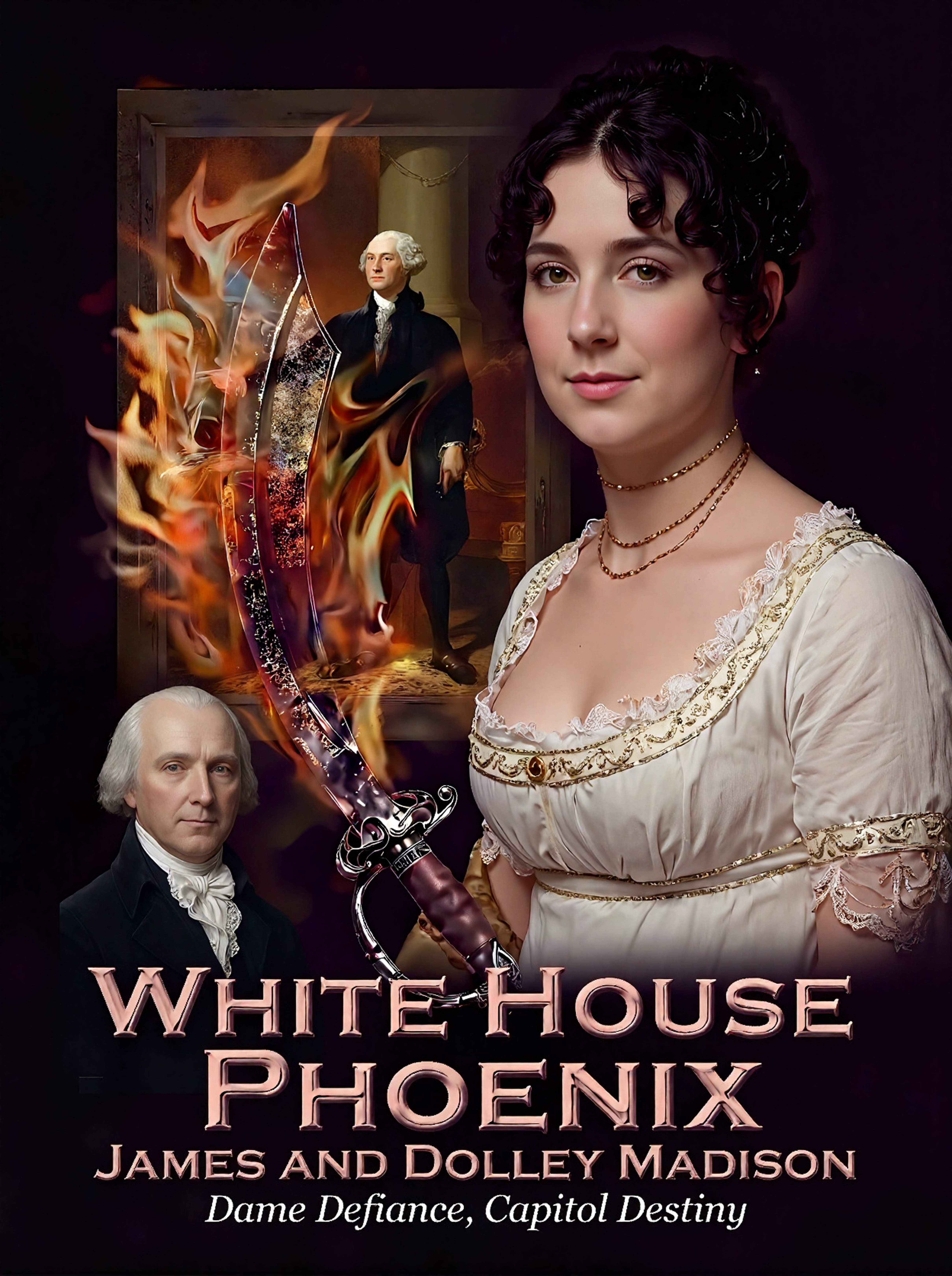
In May 1813 he burned much of Havre de Grace, Maryland, and told the survivors his reasoning: towns that defend themselves will suffer. In Washington, Dolley Madison kept a Tunisian saber within reach and went on hosting the Wednesday drawing rooms. where seated Federalists beside Republicans.
Her husband, President James Madison, who had framed the Constitution, now fought the Senate he designed. His secretary of war was convinced that the capital was a barren wilderness and not worth defending. Meanwhile, a dangerous fever led his cabinet to fear that he would not live out the summer of 1813.
Jane Hampton Cook draws on letters, newspapers, and eyewitness accounts to follow the road from Cockburn’s Chesapeake raids to the fire inside the President’s House. The architect who built the Capitol already expected Washington to burn. The men charged with defending it did not.
A film version of the Burning of the White House is in development.
Logline: Because British soldiers burned the White House, James and Dolley Madison must save Washington in three ways: a painting of George Washington, Washington D.C. as the nation’s capital city and the children of Washington.
First Lady Origin Story
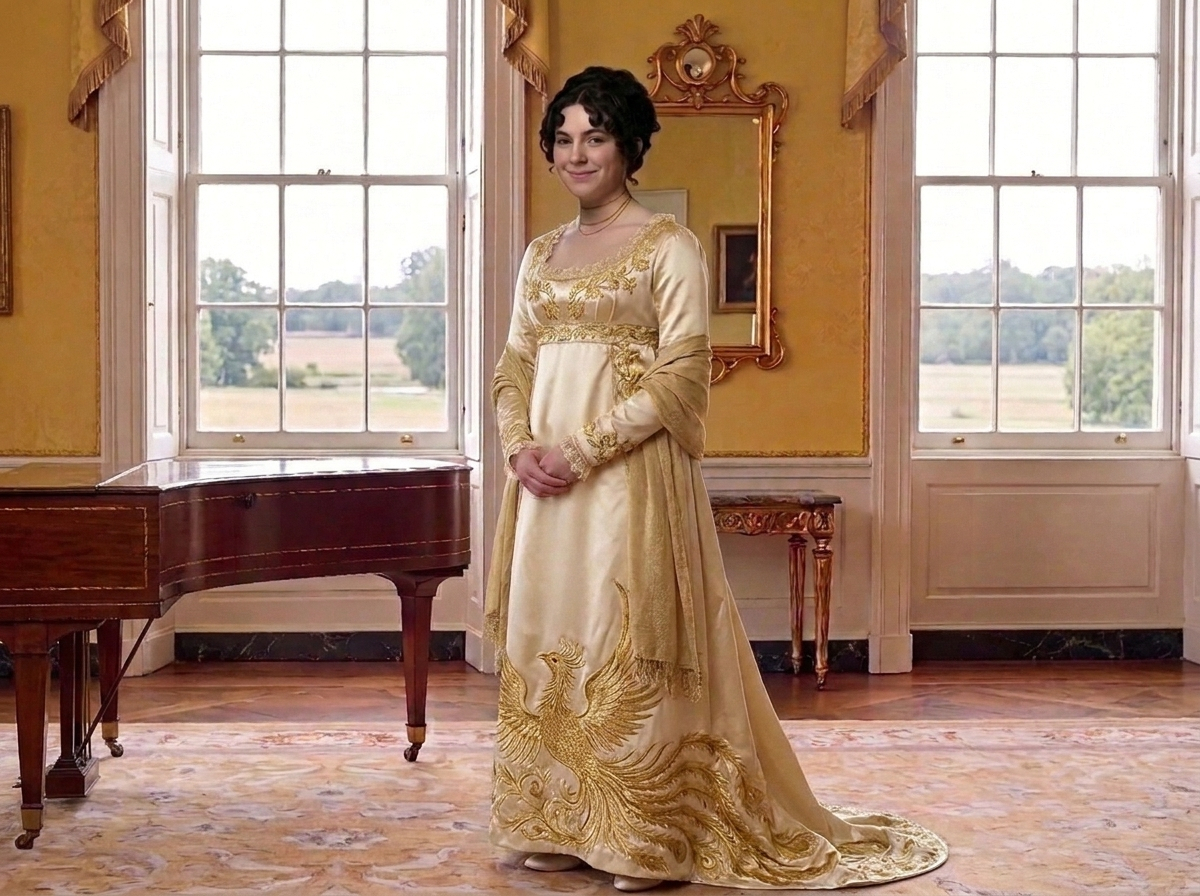
Dolley Madison was called the “first lady of the land” at her funeral. Applauded as the queen of hearts for her diplomatic and hostess skills, she was the first presidential wife to engage in public service.
After the British military burned the White House and U.S. Capitol during the War of 1812, Dolley no longer had the space to hold her legendary bipartisan parties. She took stock of her life during the remaining time left in her husband’s second term and decided to do something new. She started an orphanage for girls in 1815, becoming the first wife of president to engage directly in public service. She received a charter from Congress and organized the ladies of Washington D.C. to launch the organization.
In the aftermath of the War of 1812, her charity is similar to modern organizations that aid gold star families, such as the Gary Sinise Foundation. Her work was also the 1800s version of foster care, which is a focus of First Lady Melania Trump. Dolley Madison’s charity still exists today, not as an orphanage, but as an educational family center called Hillcrest Children and Family Center.