

Is America Becoming an Ungrateful Nation? The Historical Antidote to Cancel Culture
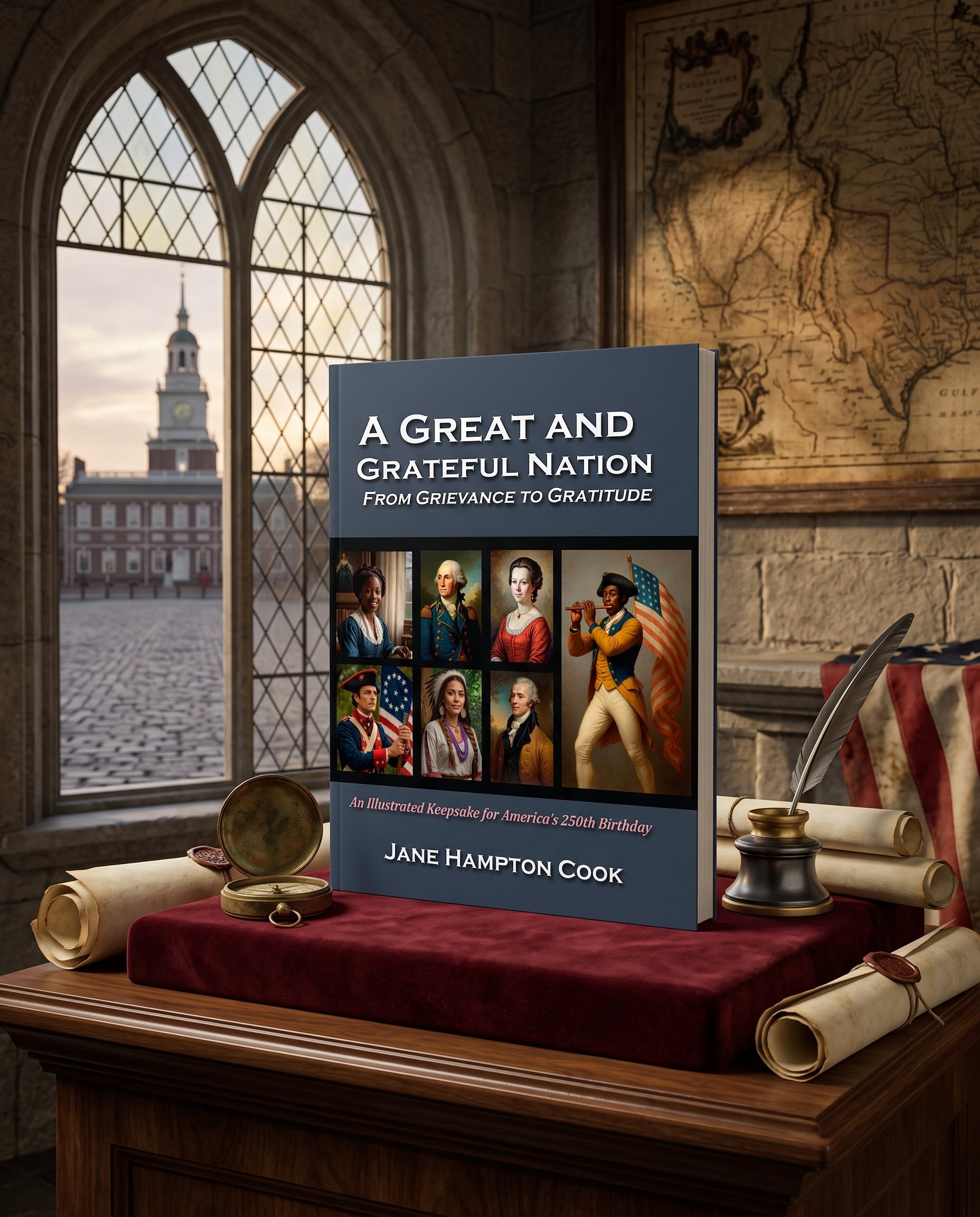
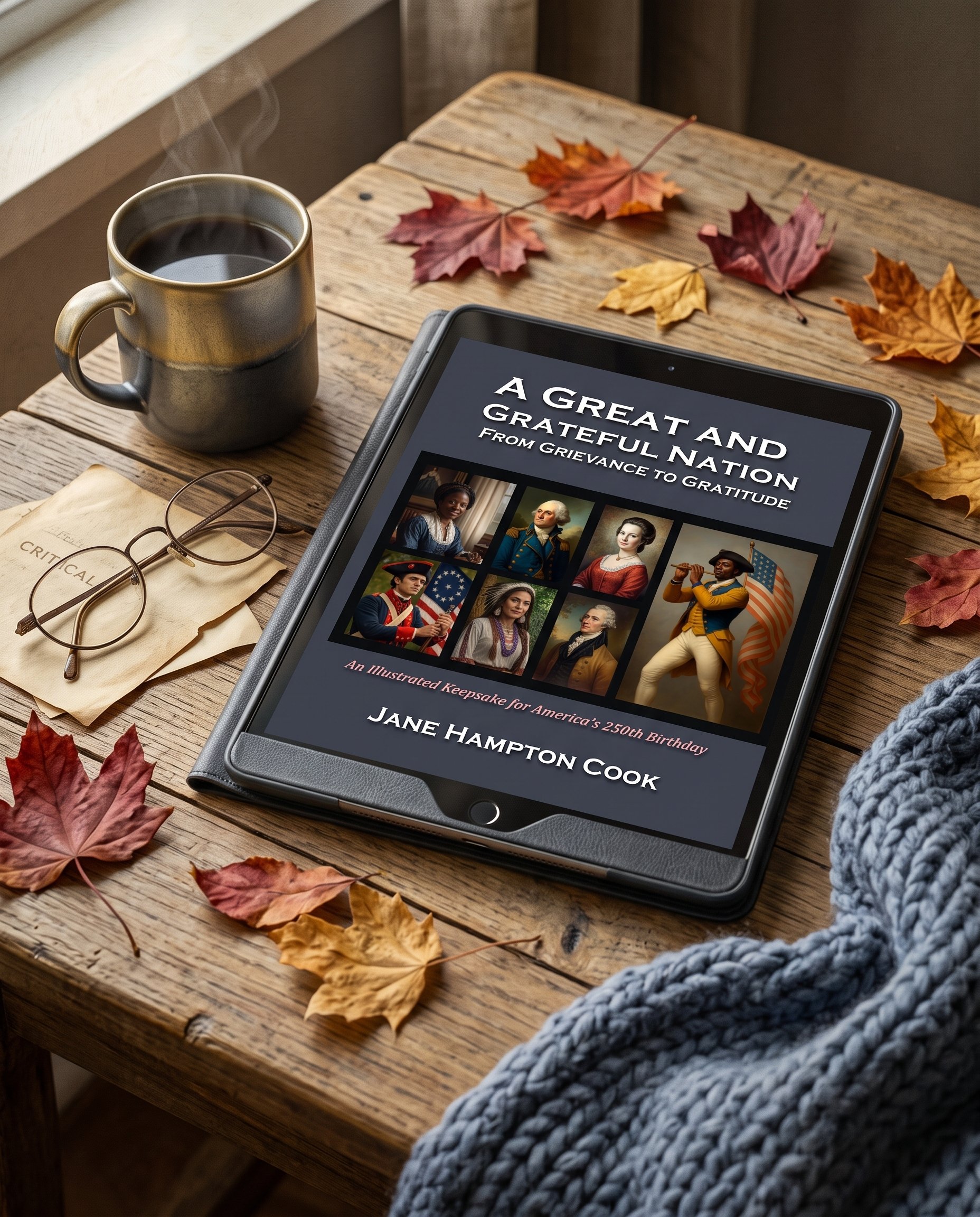
Adapted from: A Great and Grateful Nation: From Grievance to Gratitude by Jane Hampton Cook
Introduction
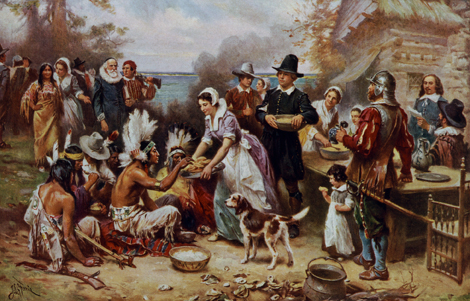
The harvested fields of Plymouth in 1621 offered a striking scene after a season of death. Of the 102 Mayflower passengers who arrived in December 1620, nearly half died during the following winter. Yet when the harvest came, the survivors refused to let their suffering be the final word.
They gave thanks. They welcomed members of the Wampanoag tribe of Pokanoket, and together these two fragile communities feasted for three days. Their example does not erase hardship, conflict, or human sin. Rather, it shows that gratitude can change the lens through which people see their past, their neighbors, and their future.
America approached its 250th anniversary amid a culture often trained to search for what is wrong, offensive, or unforgivable. A grateful nation does not deny grievances or excuse injustice. It learns to identify what is good, what was sacrificed, and what responsibilities liberty places upon us today.
The Danger of an Ungracious Generation
What happens when a people judge every prior generation only by the standards and comforts of the present? Victor Davis Hanson addressed that question in his 2021 editorial, “The Ungracious and their Demonization of the Past.” He warned that modern critics often condemn the “mute dead” while overlooking how much their own affluence, leisure, security, and opportunity rest on the toil of those who came before them.
This is not a call to treat the past as sinless. It is a call to take history seriously enough to see it whole. A healthy perspective can acknowledge slavery, discrimination, war, and failures of leadership while also recognizing the Constitution, the Bill of Rights, free speech, religious liberty, roads, power plants, and the sacrifices made from Valley Forge to Bastogne to preserve a nation worth improving.
Grievance becomes destructive when it removes every virtue, twists every motive, and magnifies every flaw until the historical record is disfigured beyond recognition. If the past contains nothing but oppression, then gratitude appears foolish and conservation appears unnecessary. Charlie Kirk made the connection plainly: “When you’re not thankful for something, why would you want to conserve that something?”
Here is a five-minute perspective-taking practice. Choose one liberty or benefit you regularly use: the freedom to worship, speak, read conflicting opinions, vote, travel, or gather peacefully. Write down one historical circumstance that made it costly, one person or generation that helped preserve it, and one way you can use that liberty responsibly today. Gratitude becomes more than a feeling when it produces stewardship.
This practice also changes conversations. Rather than beginning with an accusation or a sweeping statement about America, begin with a shared inheritance: “We have the freedom to disagree because others fought to secure it.” That sentence does not end a difficult discussion, but it gives the discussion a foundation stronger than contempt.
A nation cannot survive on self-contempt. Love of country is not blind approval of every action committed in its history; it is gratitude for the principles, people, and providential opportunities that allow citizens to correct wrongs without surrendering the nation itself.
The 1621 Framework for Unity
Can gratitude unite Americans today? The 1621 thanksgiving gives a practical answer because it began not with sameness, but with shared need. The Mayflower pilgrims and the Pokanoket had different histories, languages, and customs, and both had suffered devastating loss before they met at the fall harvest.
Edward Winslow recorded that, after the harvest, the governor sent four men hunting so they could “rejoice together after we had gathered the fruit of our labors.” Massasoit came with some ninety men, who brought five deer to the plantation. The gathering was not a mythical picture of perfect people; it was a meeting of new allies who needed one another and chose to recognize provision rather than remain imprisoned by grief.
That historical moment offers a three-part framework for bridging division. First, name the shared mercy: food, safety, liberty, family, a harvest, a place to worship, or the opportunity to begin again. Second, honor the distinct contributions present: Winslow recorded the birds supplied by the pilgrims and the deer supplied by Massasoit’s men. Third, express gratitude together in a concrete act, whether a meal, a prayer, a letter, or a conversation centered on what is worth preserving.
Try this framework at your next family gathering, classroom discussion, church meal, or neighborhood event. Before discussing a disagreement, ask each person to name one liberty, sacrifice, or provision for which he or she is grateful. Then ask participants to identify one contribution another person or group has made to the community. These small acts interrupt the instinct to reduce people to categories or grievances.
common challenge is that gratitude can be mistaken for silence about injustice. The history of Thanksgiving does not require silence. The book’s larger perspective is that gratitude enables forgiveness for past sins, wisdom from past wrongs, and hope for the future. It gives people enough moral footing to confront what needs correction without pretending that nothing worthy has been handed down.
Richard Pickering of Plimoth Patuxet Museums observed that gratitude practices are deeply embedded in human societies across time and space. The indigenous people of North and South America had long offered thanks to the Creator, and the Pokanoket and Pilgrims both built their lives around expressions of gratitude for gifts and mercies. Shared gratitude crosses language barriers because it starts with a truth all people understand: none of us created every gift that sustains us.
In her book, A Great and Grateful Nation, Jane Hampton Cook reveals that several states and groups of people lay claim to Thanksgiving fame. As far back as Texas in 1541, thanksgiving celebrations took place in Virginia, Florida, Massachusetts among indigenous peoples as well as Spanish, English and French settlers who were Protestants, Catholics, Jews. All have stories of giving thanks to God in the face of survival, danger, and change. That broad record gives Americans a better starting point for unity than the narrow and divisive habit of assigning permanent guilt or innocence by ancestry.
Conclusion
Gratitude is not historical amnesia. It is the discipline of seeing the past with enough honesty to recognize its wrongs, enough humility to acknowledge inherited blessings, and enough courage to carry liberty forward. The Pilgrims and Pokanoket did not gather because their circumstances were perfect; they gathered because they had survived and recognized gifts and mercies worth sharing. Begin today with the five-minute practice: name one liberty, remember one sacrifice connected to it, and tell one other person why you are thankful. Then use the 1621 framework when tension rises: identify a shared mercy, honor a distinct contribution, and give thanks in a tangible way. The original documents quoted throughout A Great and Grateful Nation: From Grievance to Gratitude are also available in a free digital download for readers who want to examine the proclamations, prayers, and voices that formed this national habit of thanksgiving. What is one historical liberty you have taken for granted, and how will you express gratitude for it today?