



WHITE HOUSE PHOENIX
Five words.
Spoken before one of the most consequential nights of the War of 1812.
“I’ll eat in Baltimore tonight — or in hell.”
Someone meant it as a boast.
When it came true, history had other plans.
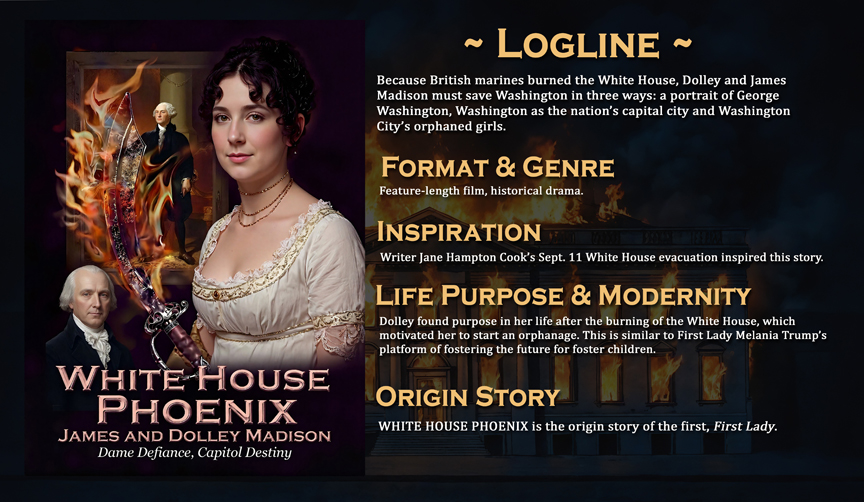
She kept a Tunisian saber within reach.
Rumors had been circulating for days — that Admiral Cockburn wanted to raid her
drawing room. That he was coming for the capital itself.
Outside, the city was beginning to panic.
Inside the sunny yellow music room, Dolley Madison waited. Spyglass in hand. Saber close.
Some people flee a storm. Others stand in the eye of it.
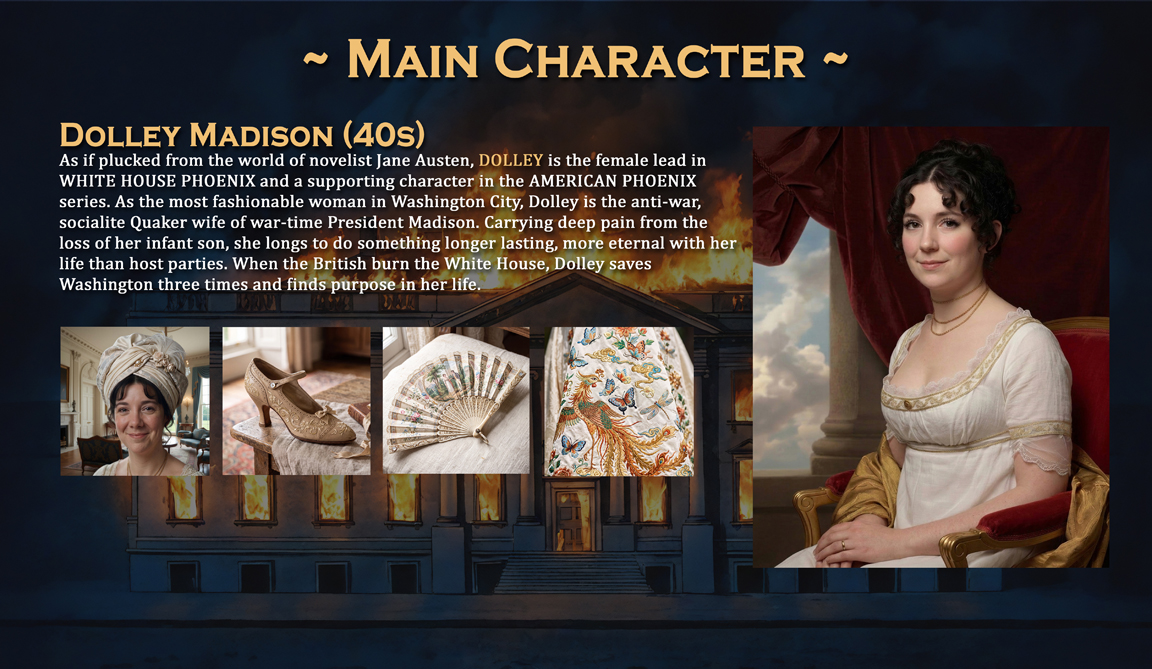
James Madison wrote the rules that govern American power. Then his own Senate used those rules to block his peace commissioners, rebuke him publicly, and stall the negotiations that might have ended the war sooner.
Cook’s account of this moment is one of the most quietly devastating in the book — a founder hemmed in by his own frame.
And yet he absorbed the humiliation rather than govern around it. That choice tells you everything about what kind of man he was.
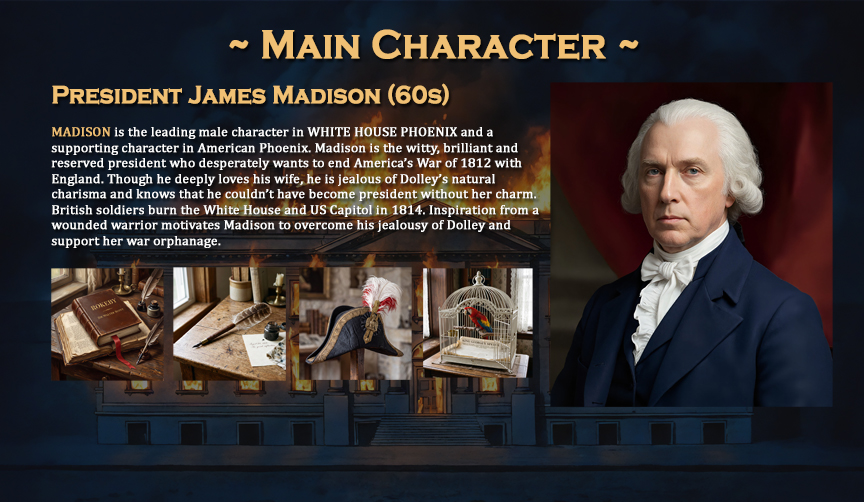
After the flames died, someone looked at the smoldering ruins of the U.S. Capitol and wrote: “The smoldering fires of the White House and Capitol were spices of the phoenix bed, from which arose offspring more vigorous, beautiful and long lived.”
They burned the seat of American democracy.
It didn’t end the republic. It hardened it.
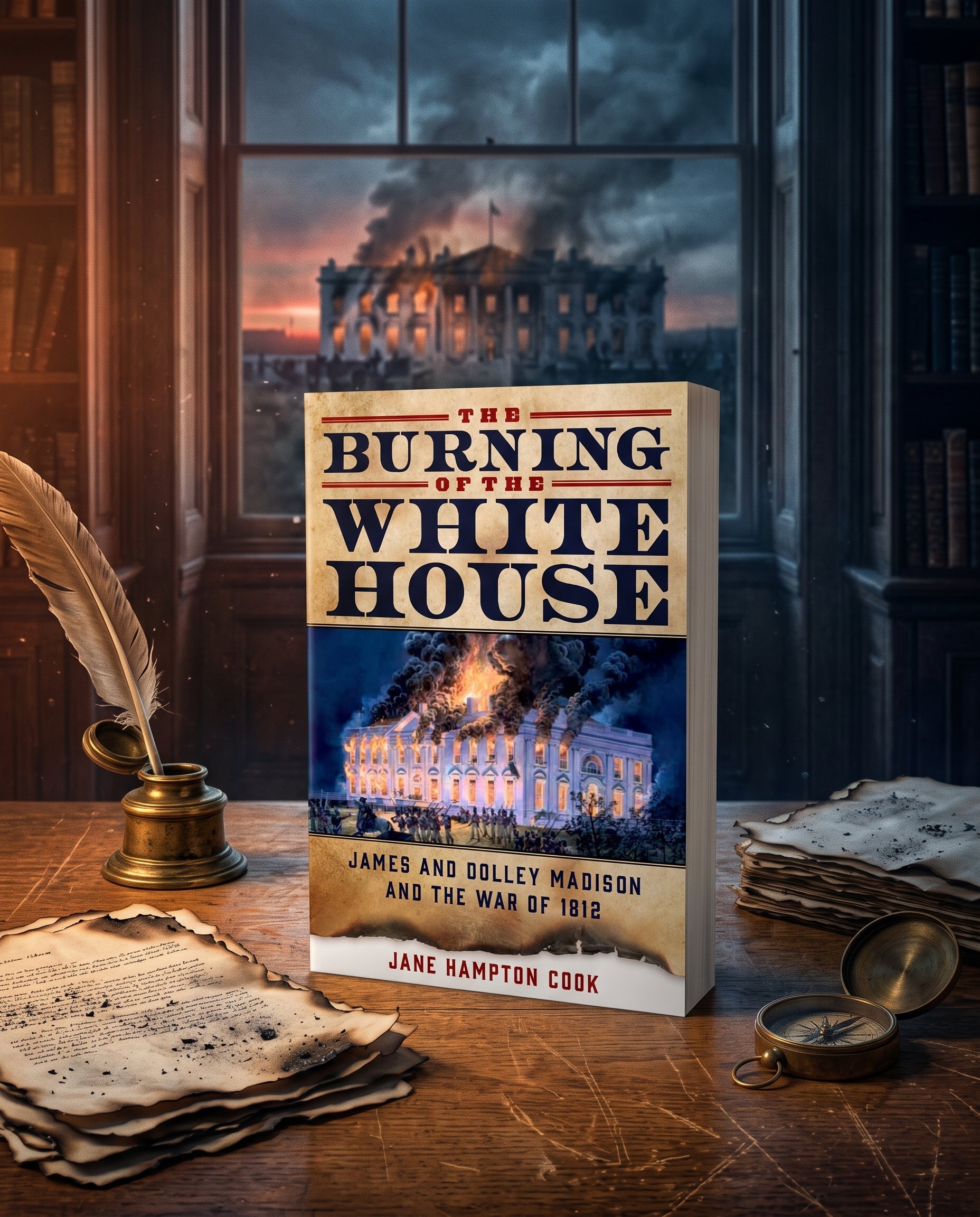
Author and Screenwriter Jane Hampton Cook
The burning wasn’t the end.
That’s what stopped me cold.
A capital in ashes. A president in retreat. A dame defiant.
And somehow — what came after was stronger.
I wrote this book and screenplay because that arc felt urgent. It felt modern, not just 1814.
Evacuating the White House on 9/11/01 drove me to 9/11 of the War of 1812.
What moment broke something open for you — and left it better?